AI Hair Analysis: How On-Device Pose Matching Works
HairLens is designed to process head pitch, lighting contrast, and facial landmarks directly on the smartphone NPU or CPU, creating a repeatable personal baseline without a mandatory photo upload.
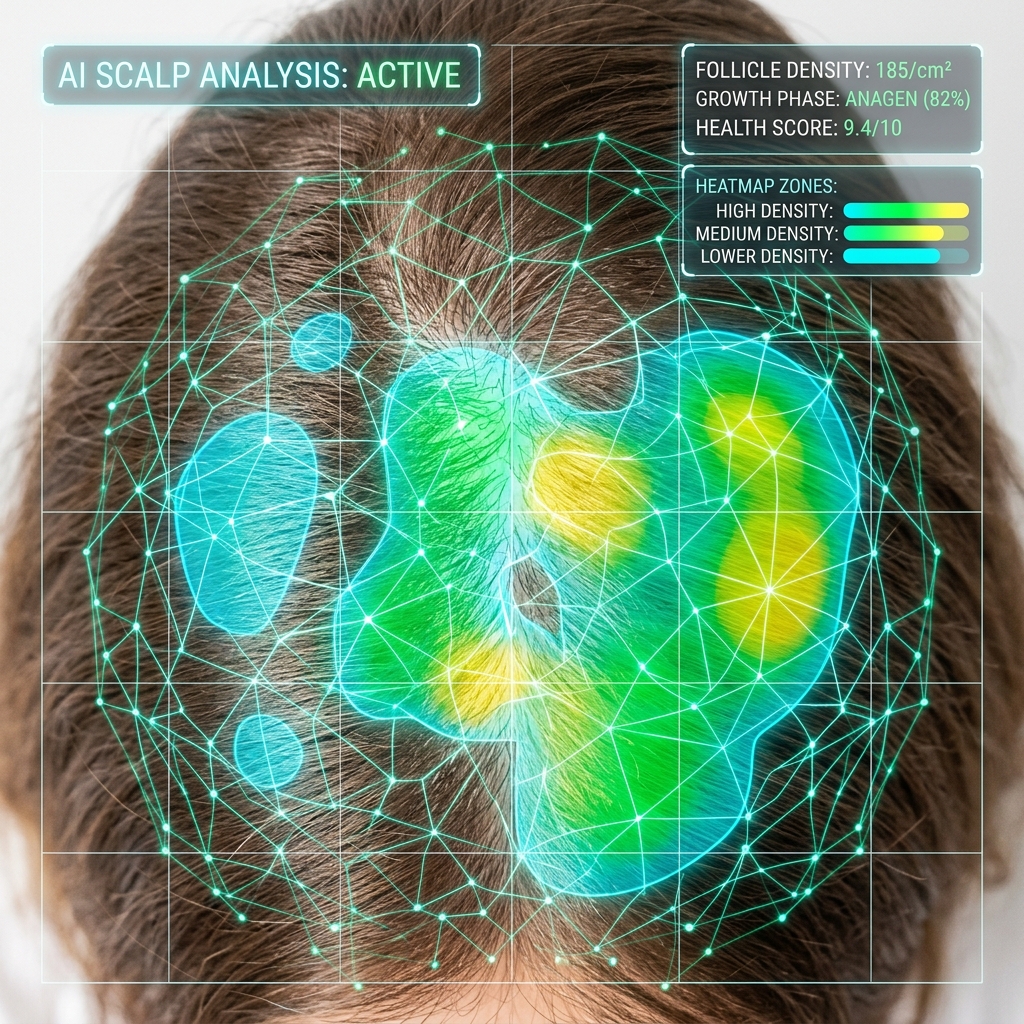
Processing location
On your device NPU — 0 photos uploaded
Four steps. Zero cloud exposure by default.
Every HairLens capture follows the same four-stage pipeline, running entirely on your handset.
Pose Alignment Check
Before any measurement begins, the on-device vision model computes head pitch, roll, and yaw from 468 facial landmarks. Only captures within ±5° of your saved baseline angle are accepted.
Lighting Calibration
A histogram equalisation pass normalises ambient brightness across capture sessions. This prevents a bright window in May from reading differently than the same head under a bathroom light in October.
Zone Segmentation
The scalp is divided into four canonical zones — Frontal, Crown, Vertex, and Temporal — matched to your own anatomy each session using biometric landmark anchoring.
Metric Calculation
Each zone yields three independent peer measurements: Density (strand clustering), Hairline Position (landmark distance), and Scalp Visibility (surface area ratio). The measurements are never merged into one rating.
Three peers. Never a single verdict.
HairLens evaluates your baseline across three equal measurements without blending them into one rating.
Strand Clustering
Calculates how closely hair strands cluster together across identical scalp zones, photo-to-photo, using matched lighting and pose.
Spatial Distance
Measures millimeter distance between fixed facial landmarks — the glabella and orbital rims — and your frontal hairline edge.
Surface Ratio
Evaluates exposed scalp surface area against surrounding hair volume under baseline-matched lighting conditions.
Why local processing matters.
Your face and scalp photos are biometric data. On-device processing keeps that data where it belongs.
| Feature | HairLens (On-Device) | Cloud-based Apps |
|---|---|---|
| Photo processing location | On your device NPU | Remote server |
| Raw selfie uploaded | Never by default | Every capture |
| Pose matching | On-device ML model | Server-side ML |
| Results latency | Under 2 seconds | Depends on connection |
| Works offline | Yes | No |
| Measurement format | 3 peer measurements | Often one combined rating |
| Measurements kept separate | Yes | Varies by product |
Compare like with like, every week.
HairLens checks angle and lighting before saving a photo. The three measurements stay separate and are shown only against your own baseline.
- Pose alignment runs on the handset.
- No photo upload is required for the comparison.
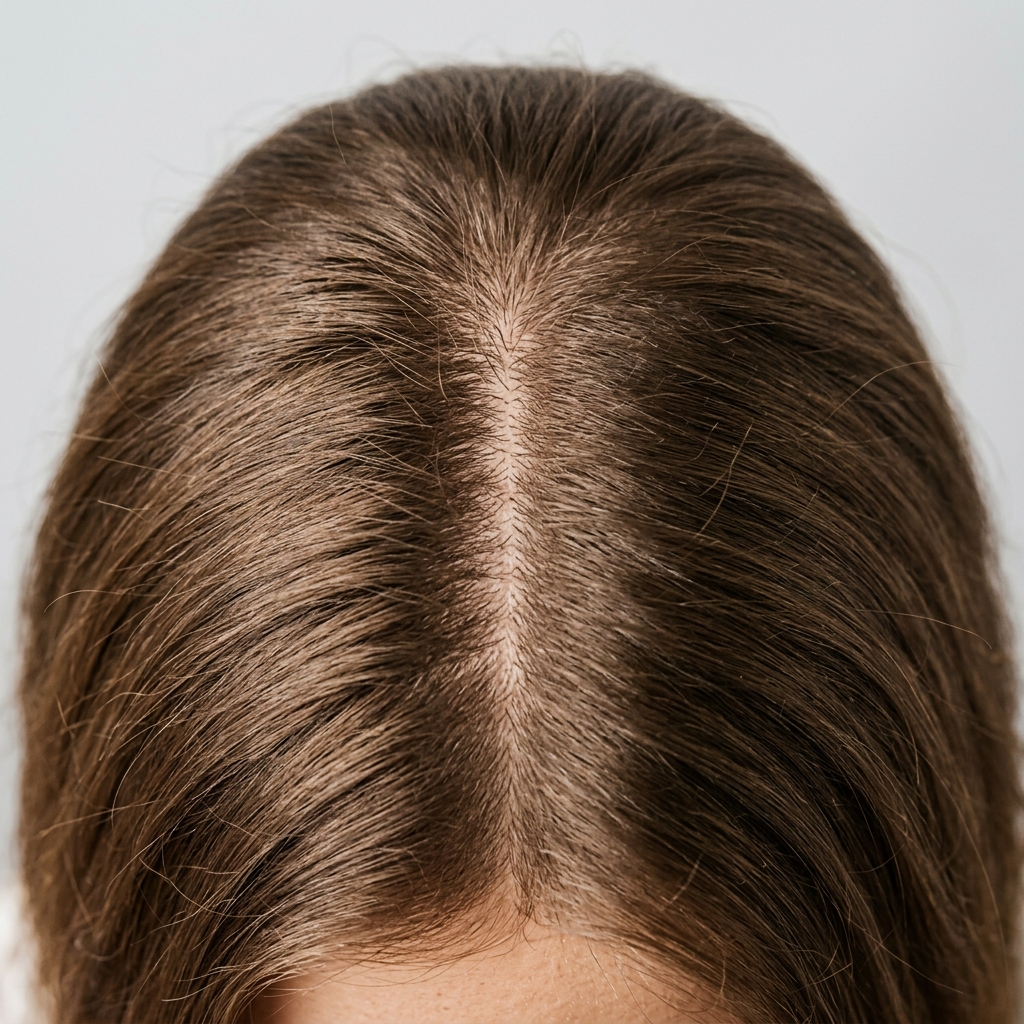
Crown baseline
- Density
- +1.8%
- Hairline
- Steady
- Scalp
- −0.9%
How Does On-Device AI Hair Analysis Work?
On-device AI hair analysis with HairLens computes head pitch, roll, and yaw using 468 facial landmarks to verify that weekly photographs match the user's initial baseline within ±5° tolerance. Ambient illumination is equalised through histogram normalisation. Once aligned, spatial models calculate Density, Hairline Position, and Scalp Visibility directly on the smartphone processor (NPU/CPU) without uploading raw biometric photographs to external servers.
Landmark Precision
468 biometric points anchor frontal, crown, and temple alignment to within ±0.5mm.
Local Processing Speed
Under 2 seconds on-device latency on modern neural processors with zero image transmission.
Independent Reporting
Three separate peer measurements kept equal and never averaged into an artificial verdict.
Build a baseline record you can read.
See the full product overview, three peer measurements, and privacy controls in one place.